
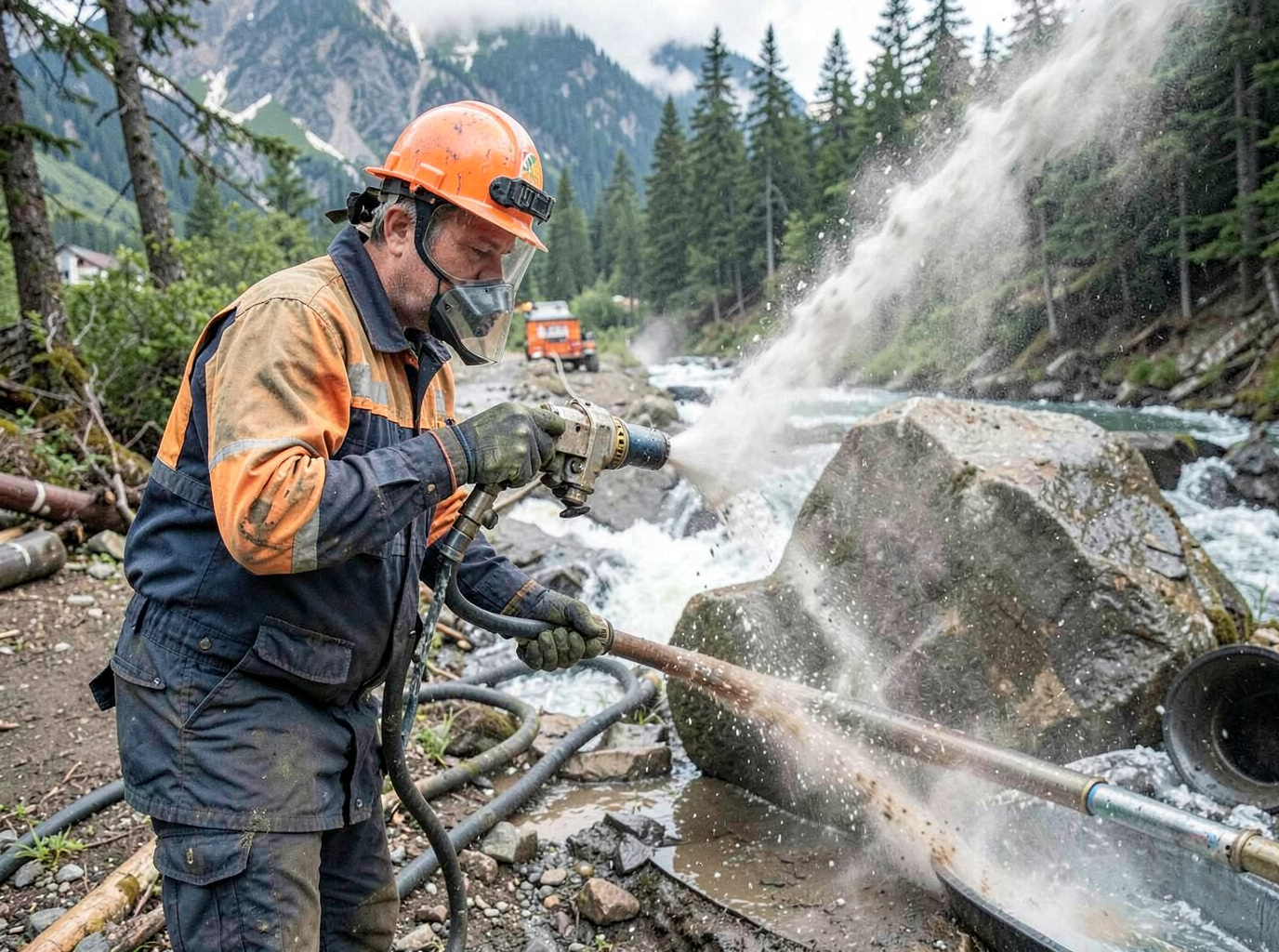
Hydro jetting uses streams of water at 3,000–4,000 psi to scour pipe walls clean rather than simply punching a hole through a clog. In Juneau’s oceanic climate the constant rain washes fine glacial silt and organic debris into lines, especially where older cast-iron or clay pipes run under Downtown properties near the Gastineau Channel. A thorough jetting pass removes the buildup that causes recurring backups after every heavy winter storm.
Douglas homes built before the 1970s often have narrow laterals running across uneven terrain toward the channel. Roots from native vegetation follow moisture trails into joints, and the cool summers slow grease breakdown. Hydro jetting cuts these roots flush while flushing the resulting debris all the way to the main, something a cable machine alone cannot accomplish on these longer runs.
Before jetting, a camera inspection identifies pipe material and any offsets that could be damaged by excessive pressure. We adjust nozzle type and flow rate accordingly, then verify the line is fully open with a follow-up camera pass. This step-by-step approach prevents pushing debris into the Juneau City and Borough mains and avoids callbacks when the next rain event hits.
Because Ketchikan and other nearby communities share similar wet conditions, the same equipment and techniques transfer directly when we handle seasonal overflow work, but most of our hydro jetting stays within Juneau City and Borough where access roads and tidal timing affect job scheduling.
Technician insight
In Juneau the thing that catches most people out with hydro jetting is how quickly glacial silt re-enters lines after a wet winter; older Downtown cast-iron laterals sit low enough that one good rain can reload them if the grade is off.
Douglas Lateral After Heavy Rain
A homeowner in Douglas reported slow drains after three days of rain. Camera inspection showed silt and fine roots filling a 3-inch clay lateral running toward Gastineau Channel. We jetted the line from the cleanout at the side of the house, flushed the material into the main, and verified full flow with a follow-up camera pass.
Hydro Jetting Services We Offer
✓Residential Hydro Jetting
Clears kitchen, bath, and laundry lines in single-family homes across Downtown and Douglas where repeated snaking no longer holds.
✓Grease Buildup Removal
High-pressure water scours cooking grease and soap residue from lines serving restaurants and older residential kitchens near the waterfront.
✓Tree Root Intrusion Clearing
Cuts roots that have entered joints in Douglas yards and restores full flow without excavation on most laterals.
✓Sediment and Silt Flushing
Removes fine glacial silt that settles in low-gradient lines after heavy rain events common in Juneau’s oceanic climate.
✓Main Line Hydro Jetting
Restores flow in four-inch and larger mains serving multi-unit buildings before backups reach living spaces.
Hydro Jetting Cost in AK
| Service | Typical Range | What Affects It |
|---|---|---|
| Kitchen or Bath Lateral | $300–$650 | Single line, standard access |
| Main Line Jetting | $450–$900 | Longer runs or multiple cleanouts |
| Root Cutting Add-On | $150–$300 | When heavy root mass is present |
| Sediment Flush After Storm | $250–$500 | Downtown or Douglas properties near channel |
Ranges are typical for AK and confirmed with an exact written quote before any work starts.
How it works
- 1
Camera Inspection
We run a camera through the line to locate the clog, note pipe material, and check for offsets or damage that could affect jetting pressure.
- 2
Access Setup
Cleanouts are opened or a roof vent is used so the jetting hose reaches the problem area without flooding finished spaces.
- 3
Jetting Pass
A rotating nozzle is fed through the line, cutting roots and blasting debris ahead of it while water pressure stays matched to pipe condition.
- 4
Final Verification
A second camera run confirms the pipe is clear and we document before-and-after footage for the homeowner.
Pricing
Most residential hydro jetting jobs fall between a few hundred and low four figures depending on access and pipe length; we provide upfront ranges after inspection.